The Author
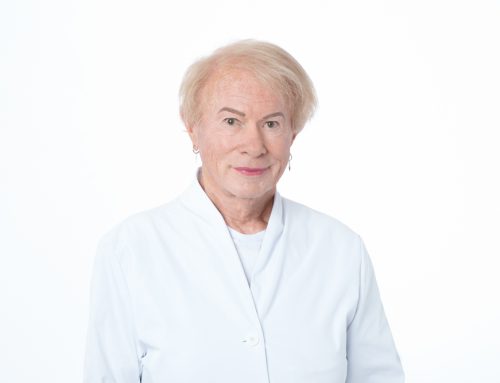
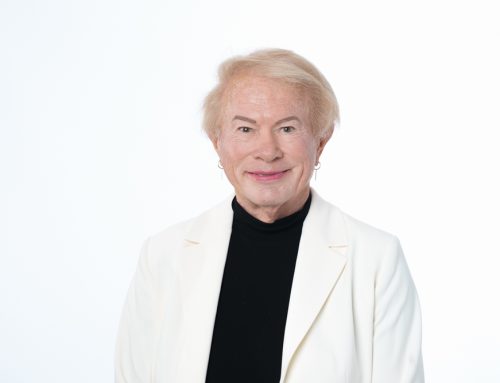
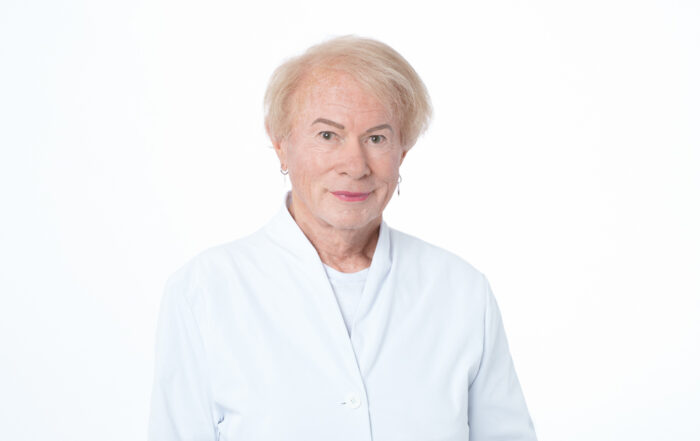
William Conway, MD, FACP, FASAM
Independent Physician: General Internal Medicine and Addiction Medicine
Writer Exploring Life’s Lessons from Autobiographies of Persons Using Heroin
Fellow, American College of Physicians (Internal Medicine)
Fellow, American Society of Addiction Medicine
Member American Academy of Addiction Psychiatry
Current Areas of Interest
- Diabetes
- Women’s Health
- Aging and Longevity
Tennessee License: MD35708:
Maintenance of Certification in Addiction Medicine, American Board of Preventive Medicine
Education:
- Phi Beta Kappa, Nominated for Danforth Fellowship in Humanities, UNC Chapel Hill
- AB with Departmental Honors in Religious Studies, capstone paper Existentialism in Europe, University of North Carolina at Chapel Hill
- MBA, Capital University Graduate School of Administration
- MD, The Ohio State University
The Pressure to Stop
You are cured! Monthly suboxone visits– Still ?
Your spouse pressures” Why are you taking Suboxone, now-after three years-Still?”
Why are you taking Suboxone- Still?
You work hard, sixty hours per week, – the “Great American Dream” to your family.
No longer paying “ really big bucks” to your “old friend”, the local master of fentanyl consumer sovereignty- the discreet, invisible, neighborly retailer of fentanyl- the Fentanyl Door Dash.
He misses you: your charm, personality, and cash. A telephone call and electronic cash transfer produces discretely packaged fentanyl in your mailbox.
His telephone number remains on speed dial- not used but not deleted. But you are cured! You will never call Fentanyl Door Dash again- Never.
Time to stop Suboxone? How will you keep your Recovery?
Your New Home in Early Recovery
You have remodeled your life. In your new home in recovery, you no longer use opioids, alcohol, or Xanax. Free from withdrawal, going to work becomes routine. Your monthly suboxone visits established freedom in routine. Routine is a foundation of recovery. Fishing and hunting fill your weekends. Trips with the kids to Gatlinburg are your treat for your wife. New habits, new freedom, new normal. We celebrate together. Life in Nashville is good.
Your home in recovery is built from many bricks:
- Sharing with your sponsor at Narcotics Anonymous
- The wisdom to allow mood disorders, ADHD, and insomnia to be treated
- Active participation in counseling or psychotherapy
- Treatment of your serious chronic medical illnesses
- Prevention or delay of your latent chronic medical illnesses
- Allowing time for the healing mystery of recovery to occur
The freedom Suboxone provides gives you a new opportunity to improve your health- now and for decades in the future. Use your precious visits for suboxone to build your new recovery home. Get your depression treated. Commit to the daily regimen of pills that treat hypertension. Get the necessary laboratory. Do you have diabetes which is silent? Are you suffering from night sweats, hot flashes, and brain fog? Are you still driven to distraction? Understand the very special relationship you had with substances. Each of these is a brick in your new home in recovery.
Recovery is more than your new home built on brick. Recovery can be your resurrection into a new life-new identity- new prosperity. I celebrate your recovery with you.
Guidance from Medicine in the Paradox of Remission
Guidance from medicine about the natural history of opioid use disorder state:
- lasts for years to decades
- abstinence is difficult to achieve
- abstinence is difficult to maintain
- slips or relapses are common
- premature death can occur from slips
The paradox of Remission in early Recovery is your treatment becomes invisible
How Long do Patients Choose to Stay on Suboxone
I have observed patients have distinct patterns of discontinuance.
In the business school, a marketer studying stopping Suboxone treatment-in the best tradition of marketing oversimplification – making an American MBA proud- advances the absurd. but graphic metaphor of track team:
- Barely out of the locker room. Discontinue in less than One Month.
- The Quarter Milers discontinue before a year
- The Milers discontinue in three to five Years.
- The Marathoners have continuous, long treatment
Treatment for Common Chronic Illnesses
Successful treatment of many adult chronic illnesses restores vitality
- GLP1 agonist for obesity
- Guideline-directed care for Heart Failure,
- intensive insulin therapy in diabetes
- contemporary treatments for depression
- buprenorphine maintenance
These chronic illnesses share these qualities:
- treatment suppresses symptoms,
- perhaps delays progression of illness,
- symptoms of the disease may recur if treatment is discontinued
What You Do When Only God Knows Your Future
If you are doing well on buprenorphine maintenance treatment, you must decide between two competing hypotheses:
- You are well because you no longer need treatment, or
- You are well because treatment is working.
Your current stability does not give you the answer. You should examine the bricks in your recovery home:
- The strength of your recovery
- The foundations of your recovery
- The contribution you decide buprenorphine makes to your recovery
In a few years, you will know your answer to stopping Suboxone. Will you continue to thrive in the “American Race,” Or, will you live in a nightmare?
Looking back is easier than projecting the future forward.
In rational economic decision-making, opportunity cost is always the central cost, and most difficult to assess, in the evaluation of alternative long-term choices. Will your opportunity cost be years or decades of losses instead of steady, gradual wins?
What about the Quarter Milers and Milers: The Decision to Discontinue Suboxone between Year One and Five
The decision to discontinue suboxone has many roots. The Roots are often poorly defined. Perhaps they arise from your unconscious. Your past may become distant. The burdens of your treatment may appear larger. Your family may encourage you to stop. You may have become confident. You may expect your willpower to sustain your recovery. Life happens.
Protecting Your Recovery When You Discontinue Buprenorphine Maintenance Treatment.
The following are bricks in your recovery home
- Narcotics Anonymous
- Psychotropics from your mental health center, psychiatrist, PCP, mid-level, or Suboxone physician
- Counseling or psychotherapy, or preferably both
- Identification and treatment of your chronic illnesses
- Healthy lifestyle choices
- Giving yourself the freedom to return to buprenorphine maintenance
Some patients do maintain long-term recovery without suboxone. Please build your recovery home strong,
Use of Autobiographies
Autobiographies published as literature provide rich insight. I will publish a series of blogs derived from
- Erin Kuhn. “Strung Out’
- Michael Clune “ White Out’
- William Burroughs “ Junky
Each of these autobiographies provides rich detail of the author’s relationship to heroin.
Having a chronic or progressively fatal disease is a common human experience. Understanding the ‘big picture of disease’ can help you make better decisions.
Recovery is one issue. Longevity is another. You will benefit if your medical decisions are made to sustain you for decades.
The Conways Make Different Choices
Biography and fiction give different insight into science. Life is richer with guidance from both science and literature. My family’s story illustrates two different approaches to treatment.
Nell Elizabeth Dupriest Conway
My mother, Nell Elizabeth Dupriest Conway, was born in Blytheville Arkansas in 1915 to a parents who were teachers in a one room school in Tomato Arkansas. Picking cotton while going to her parents’ schools, she moved to Michigan at age 15 with her recently widowed father, caring for his home at Lake Lansing, while he supported fifteen kin folks during the Depression in Paducah Kentucky with his job as a night watchman for General Motors.
Two years before her death, when I was living in Tennessee, I took Mom on a road trip back to Blytheville. She wanted to see cotton being picked again and to go to the Dixie Pig Restaurant to look for her picture. Mom was sadly disappointed upon learning times had changed, and cotton was no longer picked by hand. She also did not find a picture of herself at Dixie Pig. As Mom completed integrating the arc of her life, she accepted the fact that while she had picked cotton in Tomato, Arkansas, cotton was now harvested mechanically.
Diagnosed early with hypothyroidism, Mom took thyroid replacement- faithfully, diligently, compulsively every day of her entire life. Spending her college summers during the Depression, Mom worked as a clerk in a “swanky” chocolate shop at Michigan’s playground for the rich, Mackinaw Island. Mom indulged in one of her few vices, a lifelong love of overpriced chocolate. She was diagnosed in her thirties with type 2 diabetes, perhaps precipitated by advancing weight from chocolate-induced obesity.
Mom took diabetes medication faithfully every day of her life. Mom died at age 86 from cancer, following her husband, who died at age 52 from cancer.
Mom never had a complication from diabetes. Nor did she ever go into hypothyroid coma because of a failure to take her thyroid replacement.
Death from cancer at age 86 in a patient with diabetes is a success story. Mom was never disabled from diabetes. She never suffered from diabetes. Mom balanced checkbooks to the very end, compulsively organized. She died with her file cabinet, beside her deathbed, full of the last 20 years of tax returns. Mom understood, from her husband, the professor of accounting, the power of the IRS. On her deathbed, Mom was prepared to pass an IRS audit.
Mom stayed alive, vibrant, and active, balancing checkbooks until her death. Mom’s extraordinary longevity was a tribute to her compulsive daily attention to care of her two endocrine diseases: type 2 diabetes and hypothyroidism.
As a physician, I like to think that Mom’s extraordinary longevity was due to her consistent, compulsive decision to take her medications daily. Mom had only one regret: “ I wish I had not eaten so many chocolate bars.”
Sally Dupriest Conway O’Connor
I had an adopted sister, Sally Dupriest Conway, who moved East from Ohio to Boston to seek her fortunes. The one thing which Sally ever did well was to marry into a Massachusetts Irish Catholic family, to a policeman, whose mother was a schoolteacher. My sister became Sally O’Connor. Yankees like short names.
Sally had major depression. Before her premature death from rapid onset familial colon cancer, Sally had a severe incapacitating episode of postpartum depression Sally spent four months at the end of pregnancy in Boston’s Brigham and Women’s Hospital, birthing 35-week “preemie.”, Michael. Sally had been fragile her entire life. Her baby, Michael, was also fragile.
Treated at the depression clinic at Mass General, Sally returned to normal as a dutiful wife and daughter-in-law for the next six months. Sally experienced a new joy as she breastfed her, cuddling Michael.
Mom loved her brother’s child, Sally. Sally was always headstrong and impulsive. Mom often said, “ Sally has never been the smartest.” Sally created daily frustration for Mom.
Sally was not like Mom. After six months of normal living, which her Harvard physicians labeled by the fancy name of remission, Sally decided, “ I am cured.” Sally stopped her antidepressants.
Sally did not ask either Mom, her husband, her mother-in-law, or her psychiatrists at Mass General. One day, Sally decided to be “the real woman she was in Ohio.” She was tired of taking pills every day. She just quit.
Within a few months, Sally regressed into her private kingdom of purple darkness. Maternal joy degenerated into purple suffering. Her breast milk dried. Michael cried instead of cuddling up. Sally ruminated. Her heart shattered. Her mind persecuted her.
“ My breast milk does not satisfy my baby. Michael would be better off if I were dead.’
Her only relief became sleeping more than she was awake. She barely ate. Her lipstick and blush disappeared. She stopped dressing; Sally wore the same nightgown for days on end.
The darkness was infectious. Her husband, a policeman of few words, was beside himself. Their home was very dark.
Sally was too sick to take baby Michael to the doctor. Margaret O’Connor, Grandmother Margaret, stepped in, taking the baby to the pediatrician for the well-baby visit at the local community health center. Ben Harlan, MD, examines the slight, underfed infant Michael.
“ Why is Michael losing weight? Do you need a home visit from social services?
His words were a bullet through Grandmother O’Connor’s heart. Her conscience shouted at her in accusatory damnation.
“ You knew that Sally’s breast milk had dried up. You let Michael go hungry.’
Grandmother O’Connor falls into silent prayer.
“ Hail Mary, Full of Grace, forgive me, for I have sinned. Michael is hungry “.
Dr. Harlan was Episcopalian from a Kansas farming family. Uncommonly astute, Dr. Harlan hears clearly what is not said. Often, he had observed Irish Catholic American women on the cancer ward at Boston Children’s: the stone-faced matriarchal grandmother, the sobbing mother, all beside their suffering child with the consoling priest. He understood the anguish penetrating their hearts, screaming to Heaven for forgiveness.
“ God is punishing my child for my sins.”
Children of Irish Catholic Americans are often raised on potatoes heavily laden with guilt. I know, because that’s how I was raised. I love potatoes. Guilt keeps my venial sins from becoming mortal sins. Guilt also provides me with a competitive advantage in American capitalism. Business is business.
The boyish Pediatrician evaluated Grandmother O’ Connor. An aging Irish Catholic grandmother, her graying hair in a plain bun, her stone face expressionless, only punctuated by tears. Would he call Massachusetts Social Services?
Grandmother O’ Connor said.
“ In the future, I will feed the baby daily.”
Dr. Harlan did not call Massachusetts Social Services. He knew that Grandmother’s harsh judgment upon herself would be infinitely more effective than Massachusetts Social Services.
Grandmother O’Connor retired early from teaching at Saint Patrick’s High School. She was driven by the need to do daily penitence to save her almighty Soul. The rest of life was devoted to caring for her son, his wife Sally, and baby Michael.
Sally had married well. Sally never became again “the real woman from Ohio.” Sally never got better. She only worsened as time passed.
Grandmother O’Connor loved Sally, seeing Christ in Sally’s depression devastated body. She bathed, fed, and comforted Sally daily with love until Sally’s death. Grandmother O’Connor said a Rosary every day for Sally’s Soul.
Six years later, over a period of six short months, Sally died from a recently diagnosed fulminant, familial, rapidly progressive metastatic colon cancer. The years of progressively worsening depression had weakened Sally. The palliative care nurse from Dana-Farber Cancer Institute cared for Sally, giving dignity to her death. Sally died on Easter Day.
The O’Connors grieved Sally’s death; They were relieved. Sally’s suffering had come to an end. Sally had joined the Father, Son, Holy Spirit, and Mary, Mother of God, in Heaven for eternal life.
Father Harry gave Sally the sacrament of Last Rites. Grandmother O’Connor paid for an Advent Mass dedicated to Sally. The purple darkness enveloping their home disappeared over time. Margaret O’Connor began saying her daily Rosary for Grandchild Michael.
Easter was never the same for O’Connors.
Mom and My Sister: Different Diseases: Different Times: Different Lengths of Life
Was Sally’s depression “cured” after a successful course of treatment with antidepressants? Looking back, it appears not. Sally’s Quit decisions in her depression had lifelong consequences for the O’Connors. Only God knows what would have happened if Sally had taken her medicine from her elite physicians at Mass General. Her physicians knew the literature better than ministers know their bible. They could not convince Sally to stay on her medications. But, of course, neither could anybody else. Her physicians were elite and dedicated well past standard professionalism.
In stark contrast, my mom had extraordinary longevity. She lived a full 86 years through an era of depression, World War 2, and medical care just beginning to develop.
Mom avoided the catastrophic and frequent life-destroying complications of ‘sugar ‘. Mom also had good luck, good genes, the grit of Kentucky women, a lifelong marriage to a professor in the business school, and compulsively taking her medicine.
Like many families of her generation defined by the long decade of Depression beginning in 1929, her family in Kentucky did not have a “pot to pee in.” They avoided constant hunger through their garden. Mon’s Dad sent them money from a meager General Motors salary.
In the medical literature, Mom’s life would be quietly ignored as “confounding variables” in the search for “scientific proof through randomization.” Fortunately, Mom was more than confounding variables.
Mom’s life transcended the picture of “confounding variables.” Her decisions rippled through the family as the matriarch of the DePriests. Mom shepherded her brother Velmer’s seven children into adulthood after the death of her brother’s wife. That was even after Velmer had thrown Mom repeatedly into the Mississippi River while growing up in Tomato, Arkansas. Mom could not swim. It is a miracle she survived childhood with Velmer.
Did Mom’s compulsive, consistent decision to “ begin treatment early, always take treatment daily, and currently take treatment” enable her to live long and well through eight decades? Only God knows the answer. But I think so. I have spent a professional lifetime believing so.
Unifying Questions of the Blog Series
- How will you use the guidance of medical literature?
- What is Your Crossing?
-
- A brief crossing: You choose to use Suboxone briefly.
- A longer crossing: You choose to use Suboxone for a few years.
- Crossing back and forth: You choose to stop and return.
- A Lasting crossing: You choose to continue Suboxone for many years
- Your Life! Your Choice! Your Recovery!
I celebrate your recovery with you. Your recovery gives me joy. I have faith that you will do well in Nashville. I thank every patient who has ever been with me for the privilege of knowing you.