H1: Kratom Addiction versus Dependence: What Nashville Patients Need to Know
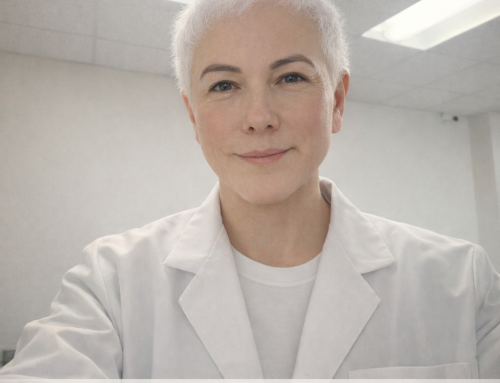
I am Dr. William Conway, MD, FACP, FASAM. I have a practice in primary care internal medicine with a subspecialty qualification in addiction medicine. These blogs are based upon what I have learned from my patients and from my mentors at the American Society of Addiction Medicine, the American Academy of Addiction Psychiatry, and Harvard Medical School.
Link to What is Kratom
H2: What is Kratom Dependence?
Kratom is a psychoactive substance. This means that Kratom acts upon the reward pathways of the brain, in both obvious ways and in ways that are not obvious. The pleasure center of the brain has a final common pathway of reacting to each psychoactive drug. While there is a common response to all psychoactive substances, there is a uniqueness to each psychoactive substance. In this blog, we will explore how Kratom is the same as all psychoactive substances and how it is different.
Dependence is a medical term that means your body reacts when deprived of a psychoactive substance to which it has become adapted and incorporated into the machinery of life. Without a constant supply of that psychoactive substance, the body has to readapt and change the machinery of life back to its baseline function without that substance.
Dependence as a medical term implies the following context, with the following elements
- Kratom is now used frequently
- The Frequency of use has steadily increased.
- Use has steadily increased.
- The body no longer reacts as it did before. Instead of pleasure, you use Kratom to avoid withdrawal.
Dependence means your body needs a constant supply of Kratom to feel normal.
Link to What is Withdrawal
H2: What is Kratom Withdrawal?
When your body is dependent upon Kratom to feel normal, a reduction in your use of Kratom or stopping Kratom entirely will produce a very predictable response. You will become sick. This immediate illness produces, in general, a flu-like illness that lasts for a few days. We call this flu-like illness acute withdrawal. After the acute illness is over, it takes several weeks to several months for the body to completely adapt its machinery to work in a fashion similar to the “before Kratom” days.
H2: What is Kratom Addiction?
Addiction is a medical term defined by psychiatrists in the Diagnostic and Statistical Manual of Mental Disorders. This standard classification system is used universally in American Psychiatry to provide a common language and an objective criterion for identifying mental illness. Addiction is considered a mental illness in psychiatry.
Kratom addiction requires more than dependence
However, Addiction requires more than Dependence. Addiction requires an additional two other elements
- Loss of Control over Intake
- Adverse, negative, or unexpected consequences from use of Kratom
Loss of control means you have cravings that you satisfy with cravings. It implies that you will continue to use more Kratom, and you cannot reduce. You cannot discontinue. You cannot reduce. You continue to take more.
Adverse consequences from Kratom can mean several things. You go from spending a few dollars a month on Kratom to a thousand or several thousand dollars per month on Kratom. You miss work because you are sick. You are spending less time with your family or spouse. You find yourself impaired. You are arrested for impaired driving. You now have very real and very expensive losses from your use of Kratom.
H2: How Kratom causes Dependence and Addiction Over Time?
Kratom acts upon the same opioid receptors as medicines like morphine and oxycodone. Over time:
- The brain adapts to a constant supply of Kratom, called Dependence
- Cravings develop, you lose control over taking Kratom, and you have unexpected adverse consequences
H2: How to Tell if You are Dependent or Addicted to Kratom
You are dependent upon Kratom if
- You experience withdrawal when you stop or reduce the dose
- Your body requires regular dosing to feel normal
You are addicted to Kratom if
- Your dose continues to increase
- You cannot control your use
- Your work, finances, or relationships are affected
H2: Why the Difference between Dependence and Addiction Matters for Treatment
The difference between Dependence and Addiction directly affects treatment.
- Dependence alone may be treated with gradual tapering
- Addiction requires normally structured medical treatment, including medication such as buprenorphine
H2: Frequently Asked Questions about Kratom Dependence and Withdrawal
- What is Kratom?
Kratom is a psychoactive substance that is currently unregulated. Kratom is commonly sold at gas stations. When patients begin using Kratom, they normally do not understand the consequences to themselves.
- Why is Kratom similar to Hydrocodone or OxyContin?
Kratom is not classified as an opioid. However, Kratom acts in the body like an opioid. Kratom produces similar effects to hydrocodone or OxyContin
- What is Dependence?
Dependence is a medical term that implies that you will become acutely sick if you reduce or discontinue your use of Kratom. Dependence implies that you have been using Kratom steadily for a long enough time for your brain to adapt to Kratom and change the basic operation of brain machinery. Discontinuing Kratom means that your brain has to readapt its machinery to a world without Kratom.
- What is Loss of Control?
Loss of control is a medical term, a psychiatric term, which implies that you have a craving that continually drives you to use Kratom, normally in increasing doses. The loss of control over taking a substance is a landmark of a disease we call Addiction.
- What are the adverse consequences?
Adverse consequences are another medical term that states that your disease of Addiction is harming you, in one or multiple ways. You are spending too much money. You are impaired. Your relationship with the people around you may be worsening. Adverse consequences are a fundamental criterion required by psychiatrists in the Diagnostic and Statistical Manual of Mental Disorders.
- Why is addiction a disease?
A disease has a location in the body. A disease has a mechanism of injury, which physicians call pathophysiology. Disease can cause suffering or shorten life. Addiction is a disease.
- How does Suboxone treat Kratom Addiction?
Suboxone is a standard treatment for opioid use disorder. Kratom addiction behaves like an opioid use disorder. Suboxone is a standard treatment for Kratom addiction. a
H2: When to Seek Help for Kratom
Seek help when
- You experience withdrawal
- Your dose is increasing
- You feel a loss of control
The earlier you seek treatment, the easier your recovery is
H2: Learn how Suboxone Treats Kratom Addiction
Conclusion
My work is to walk with you through those decisions — quietly, steadily, and without judgment. I am Dr. William Conway, MD, FACP, FASAM, in Nashville. I treat Kratom addiction wiht suboxone.
📞Call 615-708-0390 to begin Kratom Addiction Treatment in Nashville