Middle Recovery. Blog 2 in Recovery Series
Care Becoming Quiet Understanding
I am Dr. Conway, a Tennessee physician who practices private medicine in Nashville.
I will be your doctor and your teacher.
In your treatment on Suboxone, there comes a moment of the defining choice. Will you continue Suboxone long term or discontinue? I will honor you whatever you choose
Continue or Discontinue Suboxone: The Defining Choice
You made it. You stayed in recovery. You are past that initial treacherous period of early recovery. In early recovery, almost 50% of the patients who began with me did not stay in treatment.
You have the choice that defines Middle Recovery. Do you continue or stop Suboxone? Perhaps life has been good for the past few months on Suboxone.
Circumstances can and often do make discontinuance of Suboxone necessary. However, if circumstances do not intervene, you can make a deliberate choice, reflecting your preferences, your budget, and your understanding of your opioid use disorder.
Is your opioid use disorder a brief episode like pneumonia, which is cured with brief treatment. Or is your opioid use disorder like diabetes, which is a forever disease, requiring treatment forever.
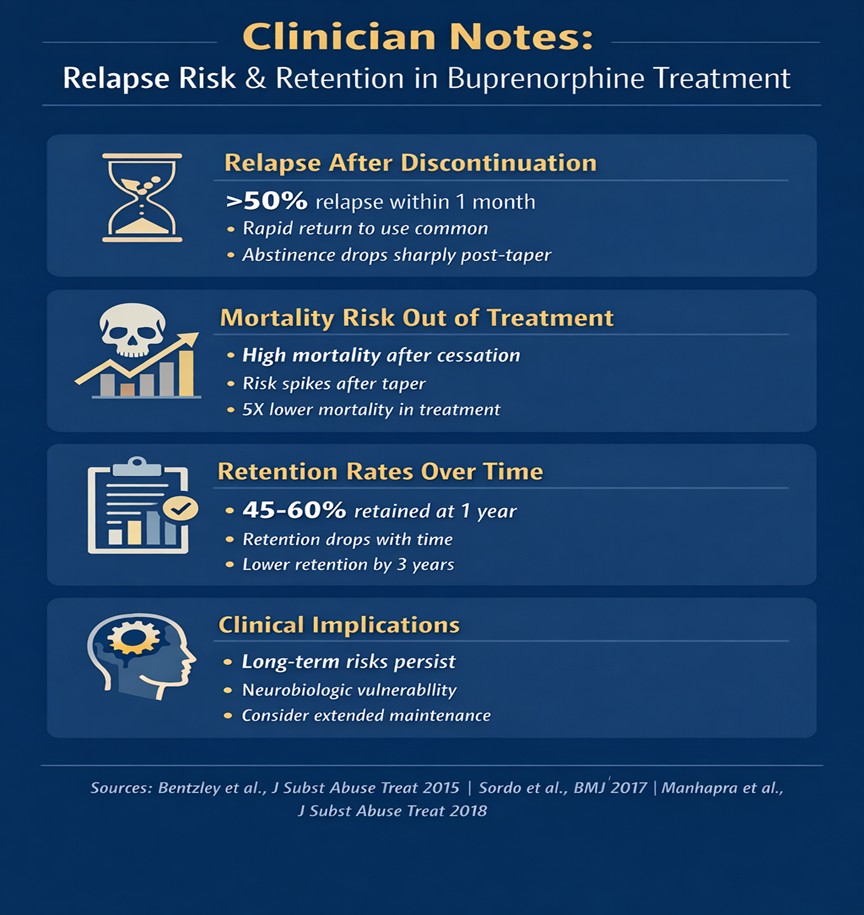
Approximately half of the patients who begin Suboxone remain on Suboxone at end of one year. Relapse rates after discontinuation often exceed 60 and in some studies approach 80%.
Life presents with certain major decisions whose consequences are long-lasting, either devastating or empowering. This is a decision with long-term consequences.
Stopping Suboxone is not a casual decision.
The Neurobiology of Choice
You are on Suboxone. You have had several months to benefit from recovery. You have almost forgotten what craving is like. Your life is stable. Work is better. Money is stabilizing. Family is calmer. You are beginning to feel normal.
You now understand the benefits of life on Suboxone. It is time that you understood what it means to have a chronic illness called Opioid Use Disorder. Understanding Opioid Use Disorder as a disease improves your chance of making the best decision for you considering your preferences.
The doctors define opioid use disorder in the following language.
- A chronic relapsing condition
- Neuroadaptations persist for years
- Risk of relapse remains elevated long term
- Some recovery occurs
What does this mean in plain English.
Your brain changed from your prior episode of opioid use. Your brain has learned fentanyl deeply. Your brain has a deep remembrance of fentanyl . Your brain can rapidly return to craving in absence of Suboxone. Without Suboxone, your brain begins to crave much more rapidly with stress. Are you prepared to manage cravings without Suboxone?
An Approach to Your Decision to Continue or Discontinue Suboxone.
15 years of my Suboxone practice have shown four common paths:
- Early discontinuance within the first month of treatment
- Discontinuance within one year
- Discontinuance after several years
- Life-long maintenance
I do know why my patients remain on Suboxone. They tell me frequently.
- They are unwilling to risk the catastrophe of relapse, with the potential for death, disability, incarceration, or losing everything
- Suboxone provides them with unexpected therapeutic benefits, becoming a foundation of their work and life
- They have other illness which they want me to treat with private medicine.
The reasons patients discontinue treatment are complex, including
- Fatigue
- Cost
- Stigma
- Desire to Feel Cured
The Other Defining Choice: Do I recognize and treat My Chronic Illness?
Suboxone is part of a larger life. In my private medicine practice, I had the same patients over years. I am sharing with you my understanding of chronic illness from what I have learned over the years from my patients. On insulin for diabetes, I am sharing with you that I have learned about chronic illness from my life experience.
You never had a course in chronic illness in high school, community college, or apprenticeship. Learning about chronic illness is “ on the job training” with the job being your life.
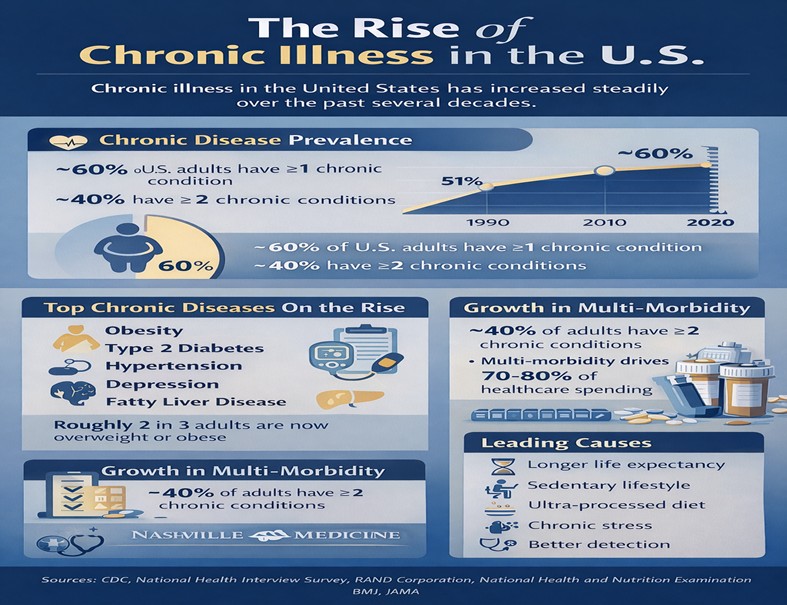
Your recovery is necessary for a life well lived, not a life lost or wasted. However, your recovery is not sufficient to have a life well lived. 60% of Americans have more than one lifelong chronic illness. 40% of Americans have over two chronic illnesses.
Chronic illness, ignored, untreated is a form of premature aging. Most chronic illnesses have an acute manifestation which can produce death, disability, major economic loss, and suffering. Hypertension works its daily damage quietly, unrecognized, being seen only in stroke, heart attack, or congestive heart failure. Such is nature of chronic illness,
In early recovery, chronic illness rarely plays a part in your life, In middle recovery, chronic illness is usually present, whether ignored or treated. In Late Recovery, chronic illness becomes central.
Conclusion
My work is to walk with you through those decisions — quietly, steadily, and without judgment. I am William Conway, MD in Nashville.
📞 Call 615-708-0390
or Request a Visit to Our Website